Tucked into the dunes of Scheveningen, Museum Beelden aan Zee is unlike any other museum in the city. This intimate institution is entirely dedicated to modern and contemporary sculpture, creating a quiet dialogue between art, architecture, and the sea just beyond its walls.
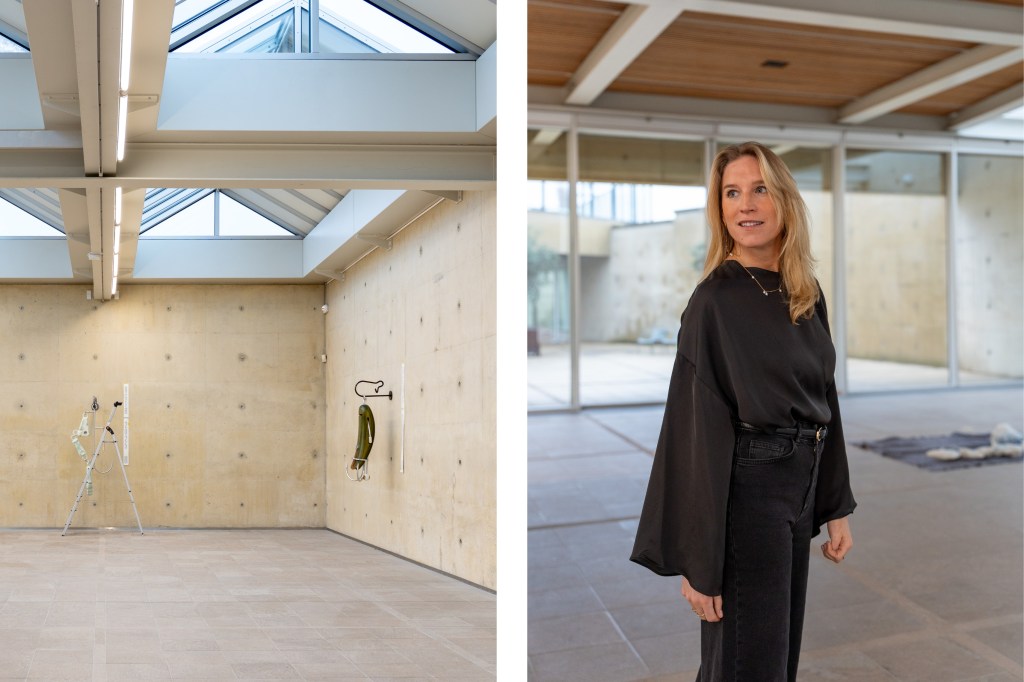
But what is going on behind the scenes at the museum, and what are they currently working on? For our Backstage series, we sat down with Brigitte Bloksma, general and artistic director of the museum, to talk about vision, the exhibitions, and the future of Beelden aan Zee.
The place where imagination takes shape
Bloksma’s vision for the museum is precise and deeply connected to its location. “For me, the challenge was to strengthen our position, in the Netherlands and internationally, as the place by the sea where sculpture, nature and architecture come together. A place where you linger.”
A strong artistic programme is essential to that idea. “It has to be high-quality and it has to be surprising,” she says. At the same time, she is deliberately focused on renewal. “I’m very aware of rejuvenation, in the programme, but also in the audience.”
That renewed direction recently resulted in a new visual identity. “We spent a long time asking ourselves: what do we stand for now? And the answer was clear: Beelden aan Zee is the place where imagination takes shape.”
The Art of creating exhibitions
Beelden aan Zee works with long timelines. “We usually plan exhibitions two to three years in advance. Our programme moves between young contemporary talents and the great masters. What we find important is that those generations enter into dialogue with each other, like the Ryan Gander x Edgar Degas exhibition we recently presented.”
Multivocality is a conscious choice throughout. “Right now, we have a solo exhibition by Surinamese sculptor Erwin de Vries. Last year we showed Khaled Dawwa, alongside exhibitions by female artists. That diversity isn’t accidental, it’s essential.”
Behind the scenes, each exhibition begins with an intensive and intuitive process. “We visit many studios and artists, sometimes at an artist’s invitation, but often on our own initiative from our own network. We’re constantly looking at what fits together. It’s not just about the exhibition in the main hall. It’s about all the museum spaces. What works together? What creates balance? That’s how programmes are built.”
That collective approach is central to how Beelden aan Zee functions. “We have a very strong, very committed team of volunteers and staff. It’s relatively young and diverse, which brings a certain energy. You can only run a museum like this well if you truly carry it together. That part is sometimes forgotten, but it’s fundamental.”
Rooted in The Hague
Beelden aan Zee’s relationship with The Hague goes beyond exhibitions alone. “We’re also a knowledge institute for sculpture,” Bloksma explains. “For example, we collaborate with Universiteit Leiden, whose students attend lectures here.”
Another important element is the museum’s extensive plaster cast collection. “It documents public monuments across the Netherlands, especially in The Hague. You can see why sculptures are placed where they are, and how they were made. The full story of sculpture in public space is being presented here.”
Education is inseparable from that ambition. “We organise a lot, for a broad audience. I want this to be a place where people meet and where conversations happen like the exhibition by Khaled Dawwa. We worked closely with the Syrian community. We also organise masterclasses and showcase artists from The Hague, like Magali Reus, now on view. That’s how you really become part of the city, in its veins.”
After Hours: the museum after dark
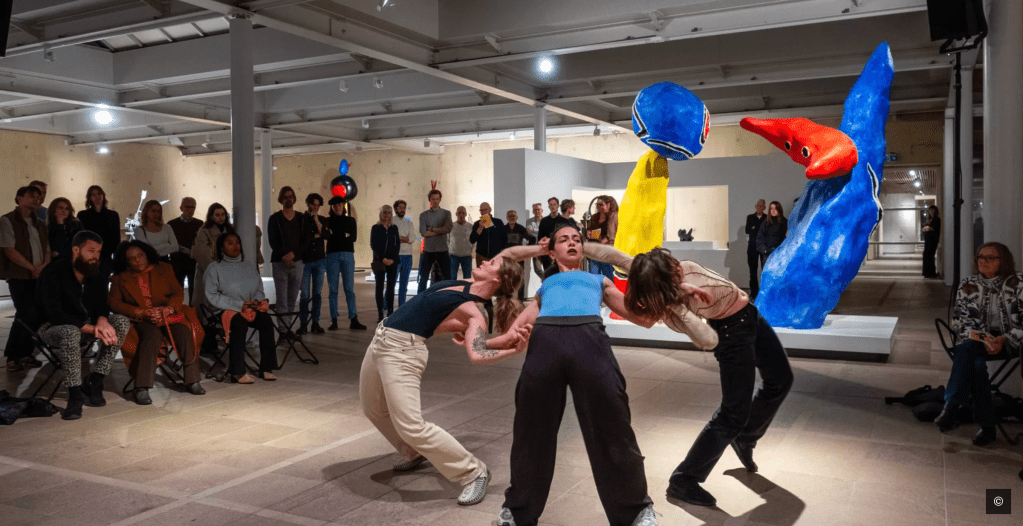
Beyond exhibitions, public programming plays an increasingly important role. “For example, we started After Hours in 2024. A Friday evening programme that takes place once every two months.”
For each edition, the museum invites a cultural partner, such as Musicon, Het Nationale Theater, PIP or Korzo. “The idea was to connect sculpture with other disciplines, and to invite young talents to create new work based on what’s happening in the museum.”
The effect has been tangible. “We reach a completely new audience, many young people who didn’t initially know much about sculpture,” she says. “They discover that it’s contemporary, alive, and relevant.”
Why art matters
Ultimately, Bloksma hopes visitors take something quiet but lasting with them. “I hope they experience a moment of calm and reflection, especially in this hectic time we live in. And I hope they leave seeing differently. Looking again, at art and at the world around them.” She pauses. “I truly believe art can offer comfort. But it can also create mutual understanding, because it acts as a mirror. If even a little of that reaches people, then I think we’re doing something meaningful.”
 twenty four the hague